 Fluminense Football Club
Tactical Analysis of Fluminense
In recent matches, Fluminense has oscillated between moments of brilliance and periods of inefficiency, especially in the offensive sector. It is evident that the team, under the coach's direction, has been trying to implement a playing philosophy that prioritizes ball possession and build-up play from the midfield. However, the lack of precise finishing and defensive fragility in critical moments raises questions about the effectiveness of this system.
Strengths
One of Fluminense's main strengths is the skill of its players in maintaining ball possession. With Agner acting as a maestro in midfield, the team can create space and opportunities. The movement of Germán Cano has been vital, as he not only finishes well but also engages in play, drawing defenders and opening paths for his teammates.
Moreover, Fábio's experience in goal brings a security that is fundamental, especially in pressure moments. The defense, led by Renê and Davi Schuindt, has also shown resilience, but attention is needed regarding lapses that can be capitalized by opponents.
Weaknesses
Despite its strengths, Fluminense has faced difficulties in quick transitions and counterattacks. In some matches, the team has shown vulnerability when caught off-guard by opponents who exploit speed. The lack of compactness between the defense and midfield sectors has been problematic, allowing the opposing team to find gaps to penetrate.
Additionally, finishing has been a constant concern. Fluminense creates chances but often fails to convert them into goals, which can be devastating in decisive matches.
Suggested Tactical Adjustments
1. Midfield Compactness: Increasing the compactness between the midfielders and defenders can help neutralize quick attacks from opponents. This can be achieved by implementing a system that prioritizes the protection of the defensive line, allowing wing-backs to advance without leaving the defense exposed.
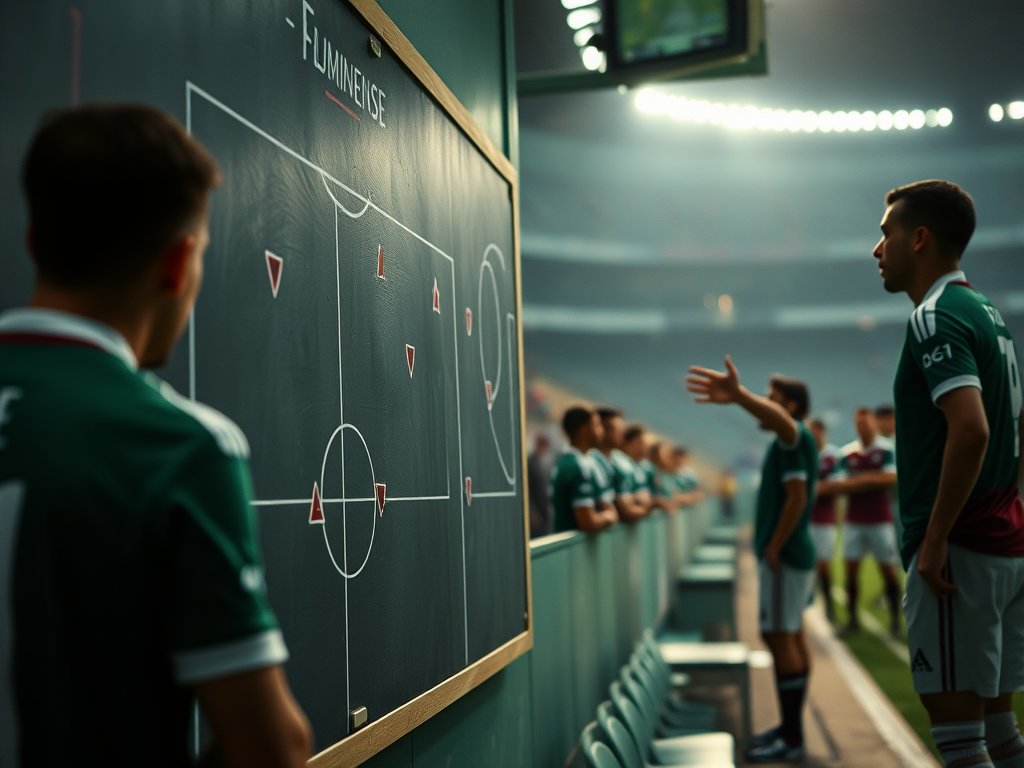
2. Alteration in Offensive Formation: Fluminense could consider utilizing an additional striker upfront to increase pressure on the opposing defense. A 4-3-3 or a 4-2-4 might be more effective, especially in home matches, where the team needs to impose its style of play and convert chances into goals.
3. Finishing Training: A greater focus on finishing drills and positioning in attack can help enhance effectiveness in finalizations. Players need to be more aligned regarding the moment to finish, whether through long-range shots or infiltration plays in the area.
Conclusion
Fluminense has the potential to be a dominant force in the League, but tactical adjustments are essential to maximize that potential. With the implementation of strategic changes and focus on training, Tricolor can not only aspire to victories but also win the hearts of its passionate fans.